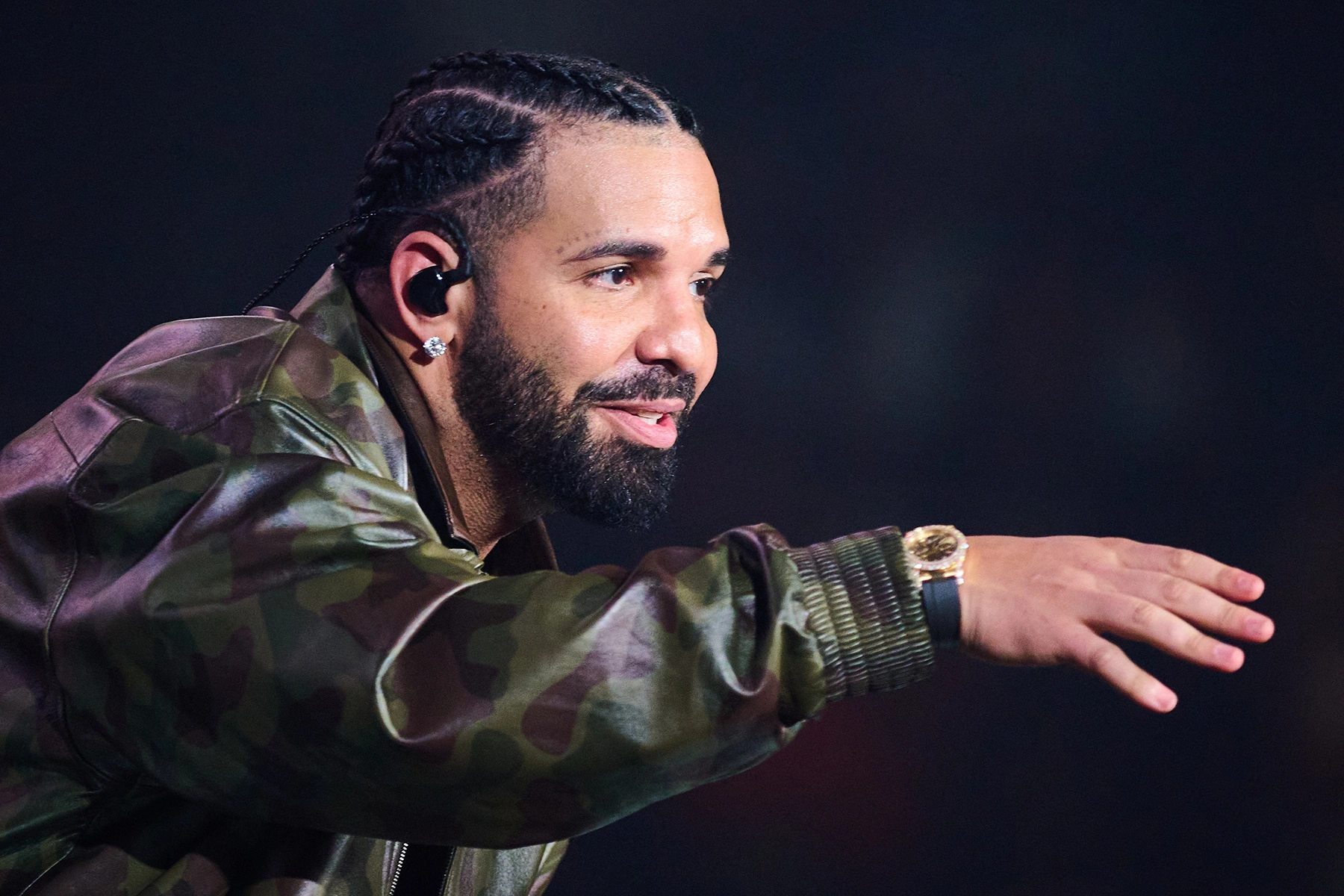
Judge Josephine L. Staton ruled the same claims cannot be refiled in federal court, though the plaintiff's lawyers say an appeal is likely.
A federal judge has permanently dismissed a proposed class-action lawsuit that accused Spotify of "turning a blind eye" to billions of allegedly fraudulent streams of Drake's music. U.S. District Judge Josephine L. Staton rejected the case with prejudice, which means the same claims cannot be refiled in federal court.
The suit was brought by RBX, a Long Beach rapper whose legal name is Eric Dwayne Collins and who is a cousin of Snoop Dogg. Drake, whose legal name is Aubrey Graham, was not named as a defendant, but the complaint repeatedly pointed to him as an example of the wider problem. It said a "substantial, non-trivial percentage" of Drake's approximately 37 billion streams were "inauthentic and appeared to be the work of a sprawling network of bot accounts." Collins argued that under Spotify's royalty system, subscription and ad revenue goes into a pool shared out by each artist's share of total streams, so fake plays take money from artists whose streams are genuine.
The first version of the suit was dismissed earlier this year as too "vague" to move forward, and an amended version followed in mid-July. Staton's 16-page ruling found that RBX had not alleged enough facts to back up his claims. She wrote: "Other than conclusory statements about Spotify turning a 'blind eye' to artificial streaming of tracks from popular artists like Drake, the [lawsuit] contains no other allegations about how Spotify selectively enforces its policies against artificial streaming."
She rejected the negligence claims, ruling that Spotify owed him no special duty to protect him from bots, and found he had not shown the type of harm needed for negligence. She also rejected his claims under California's Unfair Competition Law, ruling that the company had not made any "deceptive misrepresentations" about its anti-bot policies or unfairly applied them in ways that hurt him.
Staton also addressed the power gap between the two sides:
"Although plaintiff may have less power in the music industry as compared to Spotify, that does not mean his relationship with Spotify is characterized by any protection Spotify gives to plaintiff."
Spotify declined to comment for Billboard's story. According to the company, it puts heavy money into tools that spot, take down and punish phony plays, which it says has produced a "best-in-class system" against the issue. The company has also noted that only $60,000 of the $8 million a North Carolina man was charged with taking in 2024 through an AI-driven bot streaming fraud allegedly came from Spotify.
Earlier, in November 2025, RBX's lawyers had claimed that Spotify's policies against fake streams were "nothing more than window dressing," and that the company would prefer to do nothing because bots help its bottom line.
Rolling Stone quoted Mark Pifko, one of Collins's lead attorneys, as saying: "We are reviewing the order, but an appeal is likely." A representative for Drake declined to comment on the dismissal.
A separate case in Virginia names Drake and streamer Adin Ross, and alleges they used the online casino platform Stake.us to bankroll a network of bots that allegedly inflated streams of Drake's music. The judge stayed that case on July 30 pending arbitration between Stake and the plaintiffs, and it will remain on hold until then. No court has ruled on those allegations, and a representative for Drake declined to comment when that suit was filed.

No comments yet